
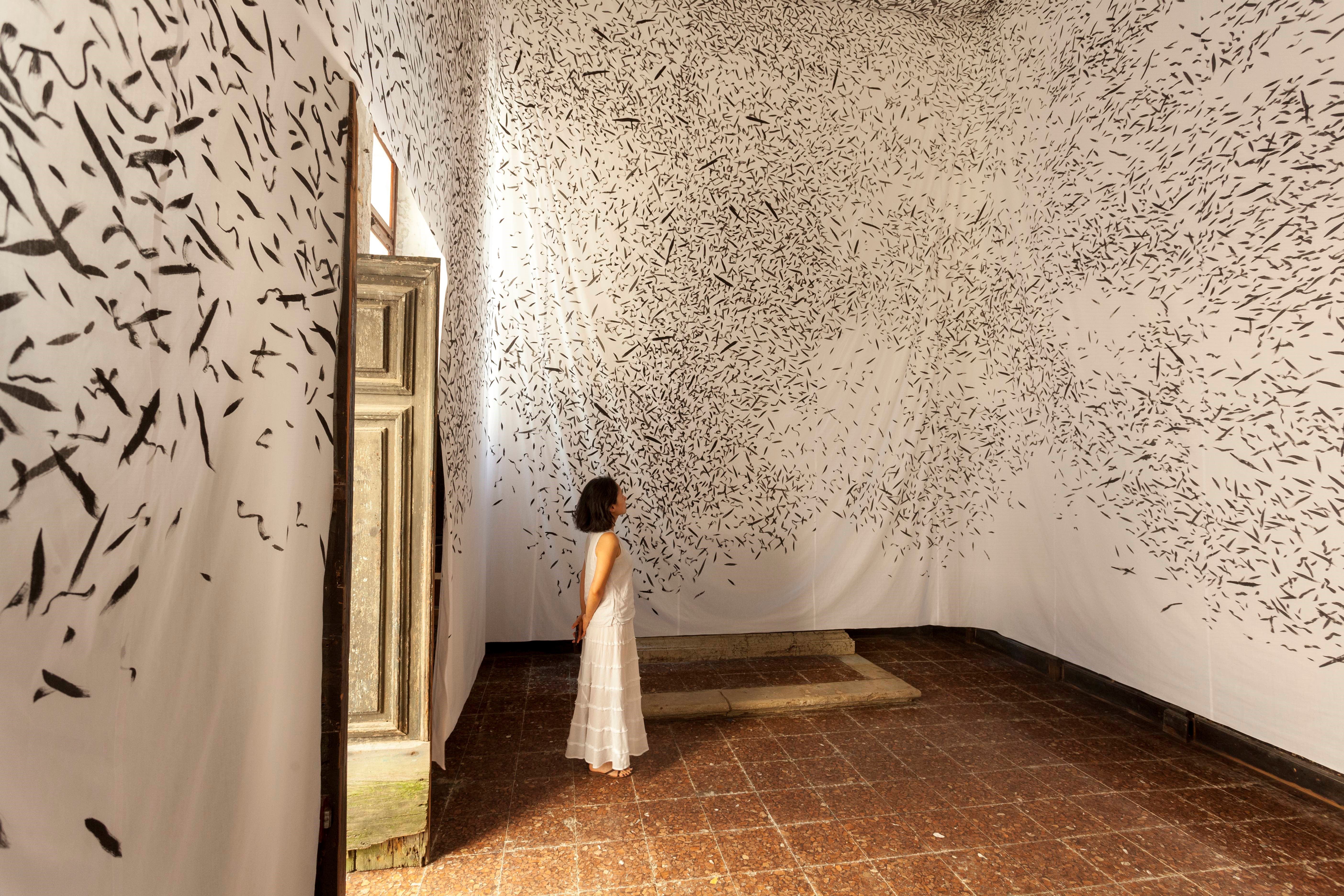
Migrant women have to go through different struggles while tackling with everyday life abroad. In this section we have decided to shed light on the experiences of migrant girls, mothers, and just females to provide more understanding of the topic.
- Borst, J., et al. (Eds.). (2023). Women’s Perspectives on (Post)Migration: Between Literature, Arts and Activism – between Africa and Europe. Georg Olms Verlag. Available at: https://ocul-uo.primo.exlibrisgroup.com/permalink/01OCUL_UO/1lvv9f7/alma991046499647005161
This book looks at women’s perspectives on postmigration through the voices of African and Afrodescendant female writers and artists. It refers to the uncomfortable stories they tell: stories about what it means to have migrated to, live in, or have been born in Romance-speaking Europe. The volume explores the concept of the “female other” and how belonging oscillates between diasporic spaces. The articles in this book cover theatre as well as literature, film, and the internet in a variety of languages. The use of art to express women’s perspectives on migration, not just through art about women but through the voices of women, needs to be understood.
- Carranza, M. (2020). Disrupting Knowledge in the Arts: Encountering the Colonial Other through Performance. Critical and Radical Social Work, 8(3), 389–403. Available at: https://ocul-uo.primo.exlibrisgroup.com/permalink/01OCUL_UO/u77on0/cdi_bup_journals_10_1332_204986020X16021574323410
This article discusses the performance We are not the Others, which represents women’s migration stories through a series of spoken vignettes developed from social work research. The performance questions the difficulty of migrant women’s belonging in the state of being the “other” and being a woman. The article investigates the process through which social workers gathered stories and challenges the audience’s expectations when seeing art used as an expression of migrant storytelling.
- Cox, A. M. (2015). Shapeshifters : Black girls and the choreography of citizenship. Duke University Press. https://doi.org/10.1515/9780822375371 Available at: https://books-scholarsportal-info.proxy.bib.uottawa.ca/en/read?id=/ebooks/ebooks0/duke/2016-02-18/1/9780822375371
The author explores how young Black women in a Detroit homeless shelter contest stereotypes, critique their status as partial citizens, and negotiate poverty, racism, and gender violence to create and imagine lives for themselves. Based on eight years of fieldwork at the Fresh Start shelter, Cox shows how the shelter’s residents employ strategic methods she characterizes as choreography to disrupt the social hierarchies and prescriptive narratives that work to marginalize them. Cox also uses these young women’s experiences to tell larger stories: of Detroit’s history, the Great Migration, deindustrialization, the politics of respectability, and the construction of Black girls and women as social problems. With Shapeshifters Cox gives a voice to young Black women who find creative and non-normative solutions to the problems that come with being young, Black, and female in America. (provided by OMNI)
- Deboeck, L., & Stratford, A. (2023). (M)Other Perspectives: Staging Motherhood in 21st Century North American Theatre and Performance. Routledge. Available at: https://ocul-uo.primo.exlibrisgroup.com/permalink/01OCUL_UO/1lvv9f7/alma991048794643205161
This anthology explores motherhood and maternity in contemporary performance. The image of motherhood scripted on stage varies widely, and it is important to consider the trends and narratives that form around the performance of motherhood on stage. The book considers how the immigrant mother is staged and what this means for the culturally created image of the immigrant mother, especially when such images remove complexity and agency from the women being written and, by extension, from actual immigrant mothers.
- Delmenico, L. (2019). Performing public presence: African migrant women create uncomfortable conversations in London. Theatre Research International, 44(1), 76-81. https://doi.org/10.1017/S0307883318001025 Available at: https://www.proquest.com/docview/2216599901?parentSessionId=r%2BUxUko29CPn7%2BEAZZHW5EaStJqOWZjJD4Fhx2Y71iE%3D&pq-origsite=primo&accountid=14701&sourcetype=Scholarly%20Journals
This article addresses a performance project titled Uncomfortable Conversations, which consists of African diaspora migrants. Performers were migrants from Sudan and Somalia, which are particularly stigmatized in current immigration debates. Titled Uncomfortable Conversations, the play itself participates in recent attempts by FORWARD, a London NGO, to approach key social issues through the arts. Active in the UK and Africa, FORWARD focuses on gender violence against women, including female genital mutilation or FGM and forced/child marriage, and participants had been previously mobilized about these issues in meetings. (from the article)
- Effinger-Crichlow, M. (2014). Staging migrations toward an American West : from Ida B. Wells to Rhodessa Jones. University Press of Colorado. https://doi.org/10.5876/9781607323129 Available at: https://doi.org/10.5876/9781607323129
In Staging Migrations Toward an American West: From Ida B. Wells to Rhodessa Jones, Marta Effinger-Crichlow draws together four case studies of African American women to describe how Black women constructed “western space” over time. Using an interdisciplinary approach with a focus on history and theatre, Effinger-Crichlow explains how African American women’s westward movement reflected everyday performances of migration, as well as symbolic and intellectual journeys. The book examines how Black women’s theatrical performances of migration toward the American West reveal their struggles for emancipation across multiple facets of identity. Although these migrations are not always across national borders, the book understands migration as also a symbolic internal journey within confined and unconfined spaces. Its case studies use real stories through theatre and performance to understand migration through an intersectional lens shaped by feminist theory, performance studies, and critical race theory. (from the review and added source note)
- Garton, R., & Rippel, I. (2019). No Woman’s Land: Walking as a Dramaturgical Device in Performance of Maternal Migration. Critical Stages, 2019(20). Available at: https://oculuo.primo.exlibrisgroup.com/permalink/01OCUL_UO/u77on0/cdi_proquest_journals_3108377127
This article looks at Zoo Indigo’s No Woman’s Land from 2016 and its use of the performance walk as a dramaturgical method for understanding migration and motherhood within the play. During the 220-mile migratory walk of a refugee mother, the embodied experience of endurance is shown on stage. The article takes the concept of kinesthetic empathy and argues that the performance of the exhausted migrant mother takes on a dramaturgy of authenticity. It breaks down not only womanhood and motherhood in migration performance but also the specific act of walking on stage and what that means for the audience’s experience.
- Henríquez, M. M. O. (2012). Mujeres mapuches migrantes en escena: Visualizando vidas desde la sombra. Letras Femeninas, 38(1), 43–54. Available at: https://www.jstor.org/stable/23345555
The article examines the portrayal of Mapuche migrant women in Argentine and Chilean theater and film productions from the late 20th and early 21st centuries. The analysis focuses on several Mapuche-created works that dramatize the migration experiences and challenges faced by these women in urban centers, serving as testimonies and resistance against the hostility and discrimination they encounter. Key findings include the presentations of Mapuche women’s perspectives across generations, as well as their efforts to retain cultural identity and community despite pressures of assimilation. The authors of these artistic works, many of whom are Mapuche, aim to raise awareness about the current realities and challenges facing Mapuche women in both rural and urban areas. (made by JSTOR AI)
- Jacobs, E. (2016). Undocumented Acts: Migration, Community and Audience in Two Chicana Plays. Comparative American Studies An International Journal, 14(3–4), 277–288. Available at: https://doi.org/10.1080/14775700.2016.1267372
This article explores the representation of migration and border crossing in Latina (1980), a play by Milcha Sánchez Scott that stages the difficulties associated with this journey. In 2010 Senate Bill 1070, one of the strictest anti-immigration legislative acts to be enforced, encouraged racial profiling in the identification of border crossers in the state of Arizona. Detained in the Desert (2011), a play by Josefina Lόpez, is a Chicana response to the passing of SB 1070, and contributes to a deeper understanding of the fraught experiences of migrant women’s lives. The study of the plays places an emphasis on transnational community building and audience engagement and builds on a range of recent critical work by border theorists and scholars such as Alicia Schmidt Camacho and Deborah Boehm, and theatre and performance critics such as Diana Taylor. (provided by the publisher – at the link above)
- Kaptani, E., Erel, U., O’Neill, M., & Reynolds, T. (2020). Methodological Innovation in Research: Participatory Theater with Migrant Families on Conflicts and Transformations over the Politics of Belonging. Journal of Immigrant & Refugee Studies, 19(1), 68–81. Available at: https://www-tandfonline-com.proxy.bib.uottawa.ca/doi/full/10.1080/15562948.2020.1843748
This paper describes how participatory theater and walking methods forge a convivial research practice, which impacts on the lives of research participants. The research explored the experiences of migrant mothers and young girls, as these two groups are often problematized or pathologized in public and policy debates. This experiential process of reflecting and working together to bring alive personal experiences of what it means to be a migrant mother or migrant girl in London fosters new insights into what kind of practices support or hinder convivial ways of living with each other. In the end, the authors illustrate how the research practice of bringing groups together to share their lived experiences, through performance, can promote convivial ways of living. (from the introduction)
- Kim, M. G. (2006). Canadian immigrant community-based theatre. Thesis (M.A.)–Ryerson University. (Dissertation) Available at: https://www.proquest.com/docview/304911952/abstract?parentSessionId=ayPUe8aHu2whbEeGCiL%2FHW4WU7cWrr9Az0Hs0
H8qtMo%3D&accountid=14701&sourcetype=Dissertations%20%26%20Theses
This study explores the potential of Canadian immigrant community-based theatre as a means of promoting empowerment among newcomers. Alongside an integrated literature review, the paper centres on a case study of a group of five Canadian immigrant women and their coordinator who participated in a community-based theatre project in Toronto called Tomorrow’s Time, funded by the Canadian Breast Cancer Foundation and facilitated by Working Women Community Centre. The paper concludes that the processes involved in community-based theatre contributed to the participants’ personal and social empowerment in terms of developing confidence, acting skills, integration within communities, and involvement in peer education. (the abstract taken from the dissertation)
- Klein, E., Mobley, J.-S., & Stevenson, J. (Eds.). (2019). Performing dream homes: theater and the spatial politics of the domestic sphere. Palgrave Macmillan. https://doi.org/10.1007/978-3-030-01581-7 Available at: https://doi.org/10.1007/978-3-030-01581-7
This book considers theatre’s role in getting us to think about “the malleability of the place we call home,” frequently highlighting a meaningful connection between houses, women, and their theatrical representations. The volume explores how theatre and performance use the idea of home as a theatrical space where cultural shifts, perspectives, and understandings can be revealed. The domestic sphere is often imagined as the place of women, and within that confinement audiences may see a microcosm for the world outside the kitchen. The book also discusses what happens when the home is removed from a person and how women contend with a sense of global homelessness as they must move across the world. Scholars of theatre history, dramaturgy, performance, cultural studies, feminist and gender studies, and critical race studies contribute to the chapters in the book. (from the review and added source note)
- Lee, E. K. (2021). Transcultural Memory and Food in Julia Cho’s Aubergine. In P. Farfan & L. Ferris (Eds.), Critical Perspectives On Contemporary Plays by Women: The Early Twenty-First Century. University of Michigan Press. Available at: https://doi-org.proxy.bib.uottawa.ca/10.4324/9780203349700
This chapter looks at food as a theatrical technique to represent transcultural memory in Julia Cho’s play Aubergine. The play contains not only a women’s perspective and experience with migration, but also uses food, deeply connected to the social history of the women’s sphere, as a dramaturgical method for postmemory. For this reason, it merits inclusion among academic sources on women’s migration in performance. The play is semi-autobiographical and includes some of Cho’s experiences with family members in hospice.
- Marchevska, E. (2017). The Displaced & Privilege: Live Art in the Age of Hostility. London: Live Art Development Agency. Available at: https://www.researchgate.net/publication/
321748854_The_Displaced_and_Privilege_Live_Art_in_the_age_of_hostility
This book can be separated in three sections: 1. Discussion sections with artists, academics and organisers about issues of displacement. The author focused on individuals who, by force or by choice, find themselves dealing with the issues of displacement. For all the people she had conversations with, the hardships of being displaced are both an existential ordeal and an opportunity to exercise their creativity. All of them deal very differently with the issues of displacement, nostalgia, hospitality and loss of space/country. 2. ‘Misplaced Women?’ 3. Provocations: The final stage of this research was an open invitation that the author extended to artists, academics and writers, to think and explore the ramifications of displacement – the disruption, confusion and instability it causes. This helped to see how art can cut through rigid territories, political hostilities and make us see hidden histories. (by the author – at the link above)
- Marziale, L. (2024). Migrant women becoming ‘stronger together’ through the arts: Creating Ground. Critical Social Policy, 44(2), 307-324. Available at: https://journals-sagepub-com.proxy.bib.uottawa.ca/doi/full/10.1177/02610183231223943
In this article the author introduces Creating Ground, a not-for-profit organisation that works with women from migrant backgrounds to promote intersectional anti-racist cross-cultural awareness, learning and sharing across different communities in South East London through collaborative arts and educational projects. She reflects on the use of participatory arts, social action and training to bring migrant women together, improve wellbeing and create change for these women at a personal and a community level. (provided by the publisher – at the link above)
- McMahon, C. S. (2013). Recasting Transnationalism through Performance: Theatre Festivals in Cape Verde, Mozambique and Brazil. Palgrave Macmillan. Available at: https://login.proxy.bib.uottawa.ca/login?url=http://books.scholarsportal.info/viewdoc.html?id=/ebooks/ebooks3/palgrave/2014-10-02/1/9781137006813
This book explores the Portuguese-language theatre festival circuit, where Brazilian, Portuguese, and Lusophone African artists come together as a cultural compiling of migration experiences through performance. These festival productions can create new perspectives on race and gender, colonial trauma, and the economics of cultural globalization. The book explores the many perspectives of the performers and creators of these festivals, including women, and how they represent new intercultural dialogues and diplomatic possibilities.
- Mesa Morales, M. (2025). Crossing Boundaries: Intermediality in Cuban-American Performance. In R. Rocha de Luna & J. Bañuelos Capistrán (Eds.), Media, Migrants, and U.S. Border(s). Palgrave Studies in Communication for Social Change. Palgrave Macmillan, Cham. Available at: https://doi-org.proxy.bib.uottawa.ca/10.1007/978-3-032-00465-9_4
This article discusses La Entrañable Lejanía / The Closest Farthest Away (LEL/TCFA), a 2009 bilingual multimedia performance by Cuban and American artists. The analysis focuses specifically on intermediality in performance by combining performance and media theory and understanding how this technique creates new storytelling modes that reflect and challenge geopolitical tensions. Understanding hybrid forms and methods through theatre helps us understand the hybrid position of women migrants, and this article can be used to connect ways of creating theatrical frameworks that are able to work with the complexities and intersectional nature of women’s perspectives in migration performance.
- Migration: Migrant Artists Changing the Rules in Post-Celtic Tiger Ireland. (2020). In The New Irish Studies (pp. 63–79). https://doi.org/10.1017/9781108564205.004 Available at: https://books-scholarsportal-info.proxy.bib.uottawa.ca/en/read?id=/ebooks/ebooks6/cambridgeonline6/2020-11-16/1/9781108564205#page=5
This chapter surveys recent Irish works by migrant artists including theatre company Outlandish Theatre (OT) Platform, novelists Ifedinma Dimbo and Ebun Joseph, filmmaker Jijo Sebastian, poet/activist Christiana Obaro, and visual artist Vukasin Nedeljkovic. As an ensemble, these artists thematically rehearse similar terrain: the hyper in/visibility of racialized female migrants, the abuses experienced by those seeking asylum, gendered inequality and violence against and within migrant communities. This chapter focuses attention not only on the works themselves but on a few recurring contexts through which significant migrant arts practice has emerged. These include collaborative arts practices that pair professional and nonprofessional collaborators, self-publishing, and activist work – all contexts that present challenges for the work gaining critical traction due to the work’s perceived lack of professionalism. (provided by the publisher – at the link above)
- Ronson, J. (2022). Uncovering women’s role in Austrian refugee theatre: the exile archives of the Institute of Modern Languages Research – Archives Hub Blog. Available at: https://blog.archiveshub.jisc.ac.uk/2022/03/01/uncovering-womens-role-in-austrian-refugee-theatre-the-exile-archives-of-the-institute-of-modern-languages-research/
This article discusses the role of women in the Austrian exile theatre Laterndl. For the 30,000 traumatised refugees from Nazi-occupied Austria living in the UK at the start of the Second World War, Laterndl was a beacon of light and hope during the dark days of the Third Reich. Refugees were living with the loss of their homes, the uncertain fate of families left behind, and the poverty and isolation of exile life. At the theatre they could laugh, weep and mourn together over stories, music and poetry presented by performers who shared the same experiences. For the artists themselves, the theatre allowed them to escape the daily grind of refugee life, provide a home for Austrian culture and contribute to the fight against Nazism. (from the article)
- Saner, G., & Dedeoğlu, S. (2017). Turkish/Kurdish Women’s Migrant
Steps in London: Public Walks, Personal Returns. In Identity, Justice and Resistance in the Neoliberal City (pp. 171–196). Palgrave Macmillan UK. https://doi.org/10.1057/978-1-137-58632-2_8 Available at: https://link-springer-com.proxy.bib.uottawa.ca/chapter/10.1057/978-1-137-58632-2_8
The authors focus on the lives of Turkish/Kurdish women living in London. By bringing together two separate research projects, an ethnographic study of labour patterns and a participatory community theatre project (Migrant Steps), they examine the effects of neoliberalism on this particular demographic and critically assess possible strategies of resistance. The chapter asks if and how engaging with London outside the dominantly Turkish-speaking neighbourhoods may constitute a form of resistance and lead to positive transformations in the place of women within the home, the community, and the city, to greater freedom and empowerment, and to creating a space in which women can identify and define themselves outside the boundaries of being wife, mother, or daughter. (provided by the publisher – at the link above)
- Sengupta, A. (2012). Staging Diaspora: South Asian American Theater
Today. Journal of American Studies, 46(4), 831–854. Available at: http://www.jstor.org/stable/23352467
This essay attempts to show how contemporary South Asian American theater deals with a wide range of South Asian American experience and in so doing has created a “new aesthetic” within American theater. The plays under study are about the old and new home, about people assimilating into the mainstream or navigating between two cultures or even negotiating a transnational identity. They deal with contested ideas of nation, nationality and allegiance, and also explore the South Asian female body in the new culture. (by the author)
- Stahl, M. (2016). Arab and muslim american female playwrights: Resistance and revision through solo performance. ProQuest Dissertations & Theses Global. (Dissertation). Available at: https://www.proquest.com/dissertations-theses/arab-muslim-american-female-playwrights/docview/1804413332/se-2
In response to the conventionally passive and limiting portrayals of Arab and Muslim women, playwrights such as Heather Raffo, Rohina Malik, Laila Farah, and Bina Sharif created a theatrical form of resistance and revision. Through an analysis of the theatrical self-representation of contemporary Arab and Muslim American female playwrights and solo performers, this dissertation examines the ways in which these one-woman shows are challenging the stereotypical racial discourses perpetuated about Arabs and Muslims after September 11. The playwrights in this study use solo performance as a means of negotiating current tensions surrounding the representation of their race, culture, and gender, simultaneously demonstrating and critiquing the construction of collective identities. Within the chapters of this study, the author investigates the artists’ use of narrative structure, costumes and props, language, and politics in their efforts to redefine the contemporary representation of Arab and Muslim American women on stage. (abstract from the dissertation)
- Willis, D., Toscano, E., & Nelson, K. B. (Eds.). (2019). Women and migration: responses in art and history. Open Book Publishers. Available at: https://directory.doabooks.org/handle/20.500.12854/28706
The essays in this book chart how women’s profound and turbulent experiences of migration have been articulated in writing, photography, art and film. As a whole, the volume gives an impression of a wide range of migratory events from women’s perspectives, covering the Caribbean Diaspora, refugees and slavery through the various lenses of politics and war, love and family. The contributors, which include academics and artists, offer both personal and critical points of view on the artistic and historical repositories of these experiences. This collection appeals to artists and scholars of the humanities, particularly within the social sciences; though there is much to recommend it to creatives seeking inspiration or counsel on the issue of migratory experiences. (provided by the publisher – at the link above)