
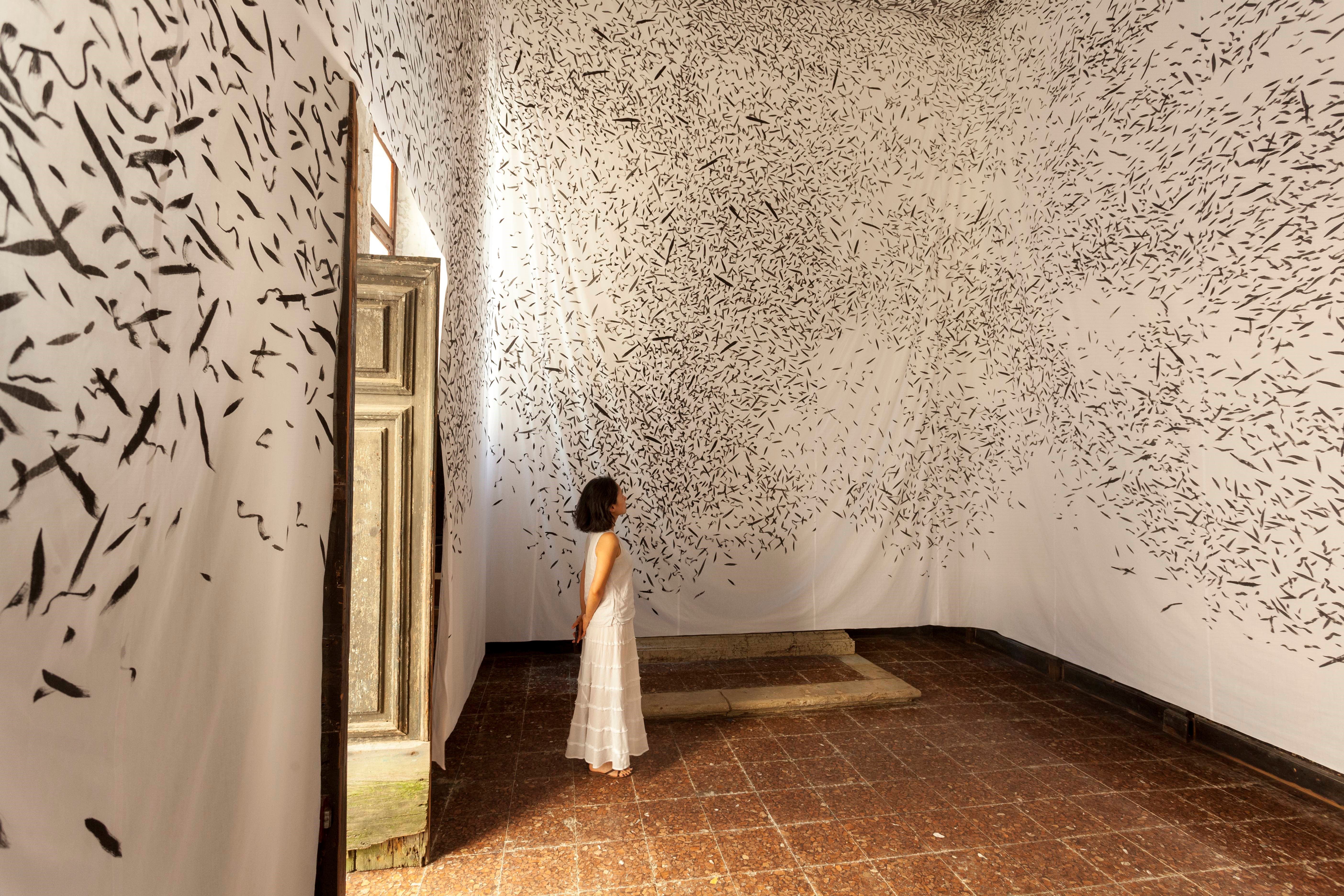
Post-migration emphasizes the conflicts and contradictions associated with belonging and unbelonging. The term “post” raises questions about when someone ceases to be viewed as a migrant, suggesting a need to de-essentialize migrant identities and break down dichotomized cultural differences. Overall, post-migration is not merely about the end of migration but about the ongoing processes and complexities of identity and belonging in a changing societal context.1
- Brauneck, M. (2017). Independent Theatre in Contemporary Europe: Structures – Aesthetics – Cultural Policy (M. Brauneck, Ed.; 1. Aufl.). transcript Verlag. https://doi.org/10.14361/9783839432433. Available at: https://directory.doabooks.org/handle/20.500.12854/30446
This book aims to offer an extensive examination of the independent European 110 reviews theatre scene, mainly after the 1990s. The topics range from examinations of cultural policies for the independent theatre in different European countries to the relation between migration and theatre practice at the European level (Azadeh Sharifi). Sharifi, writing about post-migration theatre practices, gives an overview of the state of affairs in eight European countries and analyses three minority theatres (Theatre of the Roma, German-Sorbian Folk Theatre Bautzen, Bimah – Jewish Theatre Berlin). Overall, in addition to the fact that some of the chapters deal with under-researched themes, the book lacks a clear editorial strategy and would have benefited from sharper arguments. With its substantial contribution to the field it will nonetheless spark future debate. (from the review – https://journals-scholarsportal-info.proxy.bib.uottawa.ca/pdf/03078833/v43i0001/109_.xml_en )
- Cools, G. (2015). In-between dance cultures : on the migratory artistic identity of Sidi Larbi Cherkaoui and Akram Khan. Valiz. Available at: https://archive.org/details/inbetweendancecu0000cool_t1w0
Belgian-Moroccan Sidi Larbi Cherkaoui and British-Bengali Akram Khan are two of today’s most prolific choreographers. Given their respective backgrounds and the practices they pursue, their artistic universes are largely built around their identity in-between dance cultures. Guy Cools who accompanied both, situates their work within the larger critical debate on the (post)modern and (post-)migrant identity. Cools details some of their iconic choreographic pieces. In-Between Dance Cultures offers a complementary view on questions of cultural identity taking the contemporary dancer’s somatic awareness and knowledge of the body as its starting point. (provided by the publisher – at the link above)
- Cornish, M. (2019). Migration: Common and Uncommon Grounds at Berlin’s Gorki Theater. In M.S. Boyle , M. Cornish & B. Woolf (Ed.). Postdramatic Theatre and Form (pp. 179–195). London: Methuen Drama. Available at: http://dx.doi.org/10.5040/9781350043190.ch-012
This book chapter analyses the work of Gorki theater in Germany. While this institution experiments with the form of the German state theatre, much of what is performed on the mainstage is still in the semi-documentary mode praised by some, condemned by others. Postmigrant theatre at the Gorki means engagement and reengagement over common and uncommon grounds. It means concrete social actions followed by disorder and discord, then a new play or a text by Heiner Müller, or a reimagined Brecht, then returning again to social action. It means hiring people, on permanent contracts, who would not otherwise find employment at state theatres – while also producing wild, playful events with freelance artists. (taken from the book chapter)
- Cultural Change in Post-Migrant Societies: Re-Imagining Communities Through Arts and Cultural Activities. (2024). Springer Nature. https://doi.org/10.1007/978-3-031-39900-8 Available at: https://directory.doabooks.org/handle/20.500.12854/132005
This book links the artistic and cultural turn in migration studies to the larger struggle for narrative and cultural change in European migration societies. It proposes theoretical and methodological approaches that highlight how ideas of change expressed in artistic and cultural practices spread and lead to wider cultural change. Moreover, the book discusses how migration researchers have cooperated with arts and cultural producers and used artistic means to increase the effect of their research in the wider public. As such, the book provides a great resource for graduate students and researchers in the social sciences and the humanities who have an interest in migration studies and want to move beyond interpreting the world towards changing it. (provided by the publisher – at the link above)
- Hill, M. (2018). Postmigrantische Visionen Erfahrungen – Ideen –
Reflexionen (M. Hill & E. Yildiz, Eds.; 1st ed.). transcript Verlag. https://doi.org/10.14361/9783839439166 Available at: https://directory.doabooks.org/handle/20.500.12854/32697
In order to re-consider the relationship between migration and society, Marc Hill and Erol Yildiz turn established certainties over and include the experience of migration. Their focus is on shared stories that show the versatility of urban community life. By doing so, they make migration the starting point of other analyses of society. Postmigrant visions serve as categories of the analysis of social situations of mobility and diversity, make ambiguities and marginalized memories that articulate social conditions visible. Contrasting ideas are put in the focus without overlooking conditions of dominance and structural barriers. (provided by the publisher – at the link above)
- Holdsworth, N. (2014). Theatre and national identity : re-imagining
conceptions of nation. Routledge. https://doi.org/10.4324/9780203366219 Available at: https://www.taylorfrancis.com/books/edit/10.4324/9780203366219/theatre-national-identity-nadine-holdsworth
This book offers a series of essays that explore how playwrights, directors, theatre-makers, and performance artists have re-staged or re-worked a classic national play, performance, theatrical form, or theatre space in order to engage with conceptions of and questions around the nation, nationalism, and national identity in the contemporary moment, opening up new ways of thinking about or problematizing questions around the nation and national identity. For instance, in one of the chapters the play “Woza Albert!”, which recreates scenes of racial oppression under apartheid with vitality, humor and insight, is studied. The author explores ways in which the play premises nationalism on ideals of continual revolution. Another chapter discusses the work of artistic directors, such as Shermin Langhoff at the small, independent Berlin Ballhaus and Karin Beier at the Cologne municipal theatre, for their attempts to bring Germany’s present post-migrational reality into the nations theatre institutions. (provided by the publisher – at the link above)
- Mazzilli, M. (2020). Gao Xingjian’s post-exile plays: transnationalism and postdramatic theatre. Bloomsbury Methuen Drama. https://doi.org/10.5040/9781472591630 Available at: https://www-dramaonlinelibrary-com.proxy.bib.uottawa.ca/encyclopedia?docid=b-9781472591630
In this comprehensive study of post-exile plays by Gao Xingjian, Mary Mazzilli explores his plays as examples of postdramatic transnationalism: a transnational artistic and theatrical trend that is fluid, flexible and full of variety of styles and influences. The book relates artist’s plays to postdramatic theatre and provides close textual and dramatic analysis that will help readers to better understand his complex work, and also to see it in the context of the work of contemporary playwrights such as Martin Crimp, Peter Handke, and Elfriede Jelinek. Among the plays discussed are: The Other Shore; Between Life and Death – compared in detail to Martin Crimp’s Attempts on her life; Dialogue and Rebuttal, and its relationship to Beckett’s Happy Days; Nocturnal Wanderer, Weekend Quartet, Snow in August, Ballade Nocturne etc. (from the abstract provided by the publisher)
- Post, H. C. (2021). Postmigration: art, culture, and politics in
contemporary Europe (A. M. Gaonkar, Ed.; 1st ed.). Available at: http://doi.org/10.1515/9783839448403
This book introduces ongoing debates on the developing concept of “postmigration” and how it can be applied to arts and culture. The contributions resort to cultural expressions in literature, theatre, film, and art across various European societies, such as the United Kingdom, France, Finland, Denmark, and Germany. In the chapter “The cultural capital of postmigrants is enormous” the author draws our attention to the notion of “postmigrant theatre”: it is as an experimental artistic practice concerned with roles, bodies, and as an organisational process in itself, and it has a lot to offer the social sciences as a practice of knowledge construction. (abstract from the introduction to the book)
- Prykowska-Michalak, K., & Szymańska, E. (2020). Teatr społeczny,
interkulturowy, postmigrancki. Pamiętnik Teatralny, 69(4), 85–102. https://doi.org/10.36744/pt.463 Available at: https://czasopisma.ispan.pl/index.php/pt/article/view/463
This article deals with the notion of post-migrant theatre. The study serves as a starting point for the attempt to position the activities of three theatres (Teatr Kreatur, Theater der Migranten, Ballhaus Naunynstraße) within the typology of intercultural theatre proposed by Wolfgang Sting. This is done to illustrate how migrant and post-migrant theatres can be described within the framework, and how practice and social context modify the understanding of this category. (translated from the article)
- Schramm, M., Moslund, S.P., Ring Petersen, A., Gebauer, M., Post, H.C.,
Vitting-Seerup, S., & Wiegand, F. (2019). Reframing Migration, Diversity and the Arts: The Postmigrant Condition (1st ed.). Routledge. https://doi-org.proxy.bib.uottawa.ca/10.4324/9780429506222 Available at: https://www.taylorfrancis.com/books/edit/10.4324/9780429506222/reframing-migration-diversity-arts-moritz-schramm-sten-pultz-moslund-anne-ring-petersen-mirjam-gebauer-hans-christian-post-sabrina-vitting-seerup-frauke-wiegand
This book offers a compelling study of contemporary developments in European migration studies and the representation of migration in the arts and cultural institutions. It introduces scholars and students to the concept of “postmigration”, offering a review of the origin of the concept (in Berlin) and how it has taken on a variety of meanings and works in different ways within different national, cultural and disciplinary contexts. The authors explore postmigrant theory in relation to art as well as the representation of migration and cultural diversity in cultural institutions, offering case studies of postmigrant analyses of contemporary works of art from Europe (mainly Denmark, Germany and Great Britain). (provided by the publisher – at the link above)
- Sharifi, A. (2017). Theatre and Migration: Documentation, Influences and Perspectives in European Theatre. In I. T. I. Zentrum Deutschland & M. Brauneck (Eds.), Independent Theatre in Contemporary Europe: Structures – Aesthetics – Cultural Policy (1. Aufl., Vol. 80, pp. 321–416). transcript Verlag. https://doi.org/10.14361/9783839432433-005. Available at: https://doi.org/10.14361/9783839432433-005
This chapter explores the perceptible cultural transformations happening in the European theatre landscape because of migration. While many immigrant theatre makers are excluded from public subsidies due to their residence status, there is a growing number of immigrant theatre makers who are professionally active in almost every Western European country. It attempts to present and discuss the role of independent theatre in the contemporary European theatre scene with a focus on migration, exploring the characteristics of independent theatre, changes in the European theatre landscape brought about by independent theatre groups, and where the processes of artistic changes and changes in cultural policy can be found. It goes on to explore the significance of the migration phenomenon for the contemporary European theatre landscape, cataloguing shifts in production, distribution and reception initiated by artists of colour and the Postmigrant theatre, and how state theatres and cultural institutions have reacted to it.
- Sharifi, A. (2019). The cultural and political impact of post-migrant
theatre in Germany. In The Routledge Companion to Theatre and Politics (1st ed., pp. 50–53). Routledge. https://doi.org/10.4324/9780203731055-13 Available at: https://www-taylorfrancis-com.proxy.bib.uottawa.ca/chapters/edit/10.4324/9780203731055-13/
cultural-political-impact-post-migrant-theatre-germany-azadeh-sharifi?
context=ubx&refId=99071a6c-4d60-4431-af42-c6d35fe4351c
This chapter helps us to take a closer look at the notion of “post-migrant theatre”, and specifically its political attribution. At the same time, the author highlights that post-migrant theatre, apart from creating opportunities for young artists, also created a division. Because of the fact that the post-migrant art is still labelled as ‘community theatre’ or ‘sociocultural’ projects and underfunded, young artists do not want to use the term “post-migrant theatre” in order to avoid being boxed or labelled. However, in the end, despite these tensions, the shifts that post-migrant theatre has initiated are significant.
- Stewart, E. (2015). Turkish-german scripts of postmigration: mimesis and mimeticism in the plays of Emine Sevgi Ozdamar and Feridun Zaimoglu/Günter Senkel. ProQuest Dissertations & Theses. (Dissertation) Available at: https://www.proquest.com/docview/2067084815/abstract?parentSessionId=bQbLeiZfDNxuZ%2BhQLhzyjmsNS747YdUE%
2BYXjPDlBCJA%3D&accountid=
14701&sourcetype=Dissertations%20&%20Theses
This doctoral thesis examines contemporary theatre practice and theatrical representation in the Federal Republic of Germany as a country of immigration. It traces the fates of five plays by two Turkish-German playwrights: Emine Sevgi Özdamar and Feridun Zaimoglu, who writes for the stage with Günter Senkel. The thesis focuses on these plays in performance and examines the dramatic and performance texts’ negotiations of 1) mimesis – the artistic representation of ‘the real’ – and 2) mimeticism – a mechanism identified by cultural theorist Rey Chow as relying on Platonic concepts of idealised ‘originals’ to keep certain subjects ‘in their place’. (by the author)
- Stewart, L. (2017). Postmigrant theatre: the Ballhaus Naunynstraße takes on sexual nationalism. Journal of Aesthetics & Culture,
9(2), 56–68. https://doi.org/10.1080/20004214.2017.1370358 Available at: https://www.tandfonline.com/doi/full/10.1080/20004214.2017.1370358
Theatre is seldom considered a major social or theoretical mover today; however, since its inauguration in 2008, the Ballhaus Naunynstraße theatre in Kreuzberg, Berlin, has been hugely instrumental in bringing the concept of postmigration into the public realm in Germany and beyond. Shermin Langhoff, the founding artistic director of the Ballhaus, explains that “postmigrant means that we critically question the production and reception of stories about migration and about migrants which have been available up to now and that we view and produce these stories anew, inviting a new reception”. In this article the author explores the narratives and gestures through which the theoretically aware postmigrant theatre as practised at the Ballhaus. The author suggestds that a broad view of the theatre’s repertoire over its first decade reveals a long-standing concern with and intervention into the intersection of discourses on sexuality, gender, and migration. (provided by the publisher – at the link above)
- Stewart, L. (2021). Performing new German realities : Turkish-German
scripts of postmigration. Palgrave Macmillan.
https://doi.org/10.1007/978-3-030-69848-5 Available at: https://link-springer-com.proxy.bib.uottawa.ca/book/10.1007/978-3-030-69848-5
This book sheds light on the Turkish-German theater, while drawing attention to the ways in which it has intervened in, or “rescripted,” the theatrical establishment. The work thus provides a critical expansion of the Turkish-German studies archive through close reading of play-texts within their multiple performance contexts and histories. The author provides new insights into Turkish-German theater history and its place within and interventions in the German theatrical landscape, as well as its significance for contemporary theater practice and the postmigrant movement in particular. Furthermore, the book is sure to seed future scholarship on additional periods of Turkish-German theater history, but also on the impact of recent migrations and the potential limits of postmigrant theater. (from the review – https://www.proquest.com/docview/2700012552?parentSessionId=R0lihjZY8eBdTM%2F9xwyvAzX2B758lPnuOQ8QYKcG32s%3D&pq-origsite=primo&accountid=14701&sourcetype=Scholarly%20Journals )
- Verstraete, P. (2013). Turkish post-migrant “opera” in Europe: a
socio-historical perspective on aurality. Themes in Theatre, 7., pp.
185-207,236-237,243. ISSN: 1871-8736 Available at:
https://www.proquest.com/docview/1448411239?parentSessionId=
48sjq16eBd4E0hJWKkKmBIS8pe91LEeY1f6AS5PbW6w%3D&pq-origsite=
primo&accountid=14701&sourcetype=Scholarly%20Journals
The aim of this chapter is to historically contextualise and describe the emergence of Turkish post-migrant music theatre and opera against the background of multiculturality in Europe by means of two recent productions: Lege Wieg, and Tango Türk. Through the reinterpretation of traditions, post-migrant music theatre and opera offer points of access to issues of identity, belonging, distance and cultural representation that are most relevant to the integration debates but equally to people who have had little previous access to traditional opera and music theatre. (taken from the different parts of the article)
- Verstraete, P. (2015). Cross-Cultural Theatre around the World: Looking for Transnational Migration Studies between Europe and the U.S. Available at: https://www.academia.edu/35723539/Cross_Cultural_Theatre_around_the_World_
Looking_for_Transnational_Migration_Studies_between_Europe_and_the_U_S?sm=b
In this paper the author suggests comparing recent critical approaches and debates in the cultural field of transnational migration studies, with a focus on ‘cross-cultural’ and ‘post-migrant’ theatres. This focus will be narrowed down by looking particularly at the discourses of Turkish migration and diaspora surrounding the Ballhaus Naunynstrasse in Berlin (Germany), the Arcola Ala-Turka company in Dalston-Hackney (UK), Theater RAST in Amsterdam (the Netherlands), the Turkish American Repertory Theater in Baldwin New York (U.S.), the ReOrient Festival in San Francisco (U.S.) and the Cornerstone Theater Company in Los Angeles (U.S.). The author questions the differences in the companies’ self-definitions in relation to their cultural climates and the retellings of the different pathways artists make within the scope of their works and careers. In addition, he explores how these founding ‘narratives of self’ in view of an increased social mobility could be explained through the wider discourses of transnational migration studies, as they are currently being developed in Europe and the U.S. (written by the author – access at the link above)
- Gaonkar, A. M., Hansen, A. S. u00d8., Post, H. C., & Schramm, M. (Eds.). (2021). Front Matter. In Postmigration: Art, Culture, and Politics in Contemporary Europe (1st ed., pp. 1u20134). transcript Verlag. http://www.jstor.org/stable/j.ctv371bzgk.1 ↩︎